
Journal of Pharmacy Practice and Community Medicine
Volume 12, Issue 4 • 2026
Exploring Pathogenesis, Clinical Manifestations, and Management of Human Metapneumovirus Infection
Human Metapneumovirus (HMPV), identified in 2001, is an emerging respiratory virus. Within the Pneumoviridae family, genus Metapneumovirus. This RNA virus is now recognised as a substantial cause of both upper along lower Respiratory Tract Infections (RTIs), affecting individuals belonging to all ages. While this virus may impact healthy adults, the most vulnerable populations include young children, infants, elderly adults, as well as immunocompromised individuals. Pathophysiology of HMPV involves its entry into respiratory epithelial cells, facilitated by viral Fusion (F), attachment (G) proteins. After entering the host cell, HMPV replicates in the cytoplasm, leading to the production of new virions that further propagate the infection. Both innate along adaptive components are essential to the complicated immune response to HMPV. Innate immunity, including pattern recognition receptors and natural killer cells, provides the first line of defence, while the adaptive immune response, consisting of T cells, antibodies, and B cells, is responsible for clearing the virus and offering long-term immunity. However, in severe cases, immune responses may contribute to lung injury, airway remodelling, and fibrosis, especially in individuals with pre-existing conditions or those experiencing prolonged infections. Clinically, HMPV infection varies from mild symptoms like cough, fever, as well as sore throat to more severe manifestations, for example, pneumonia, bronchiolitis, and respiratory failure. Supportive care, which includes hydration, is the main emphasis of management and rest, though antiviral treatments, for example, intravenous immunoglobulin, ribavirin, along with monoclonal antibodies, may be considered in severe cases.

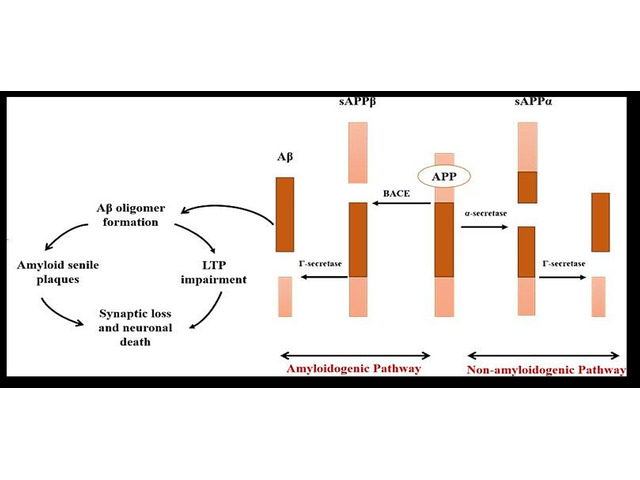
Role of Amyloid Beta and Tau Protein in Alzheimer’s disease
Alzheimer’s disease is the leading cause of dementia and represents the most prevalent neurodegenerative condition worldwide. It is characterized by progressive deterioration in short-term memory and cognitive abilities, eventually interfering with everyday activities and behavior. Although most cases occur sporadically, a smaller proportion is inherited, enabling the identification of specific genes that, along with neuropathological findings, provide valuable insight into the broader origins of the disease. A variety of environmental and metabolic influences, such as inflammation and vascular dysfunction, are also believed to contribute to the initiation and advancement of the disorder. Despite widespread neuronal shrinkage and synaptic loss across the cerebral cortex, the precise mechanisms responsible for these changes are still not fully understood. The primary pathological features associated with Alzheimer’s disease are amyloid-β plaques and neurofibrillary tau tangles. Although these protein accumulations have been intensively studied for decades, their exact contribution to disease progression remains uncertain. This review explores several proposed mechanisms involved in Alzheimer’s disease, including inflammation, mitochondrial impairment, oxidative stress, and disruptions in protein clearance pathways.
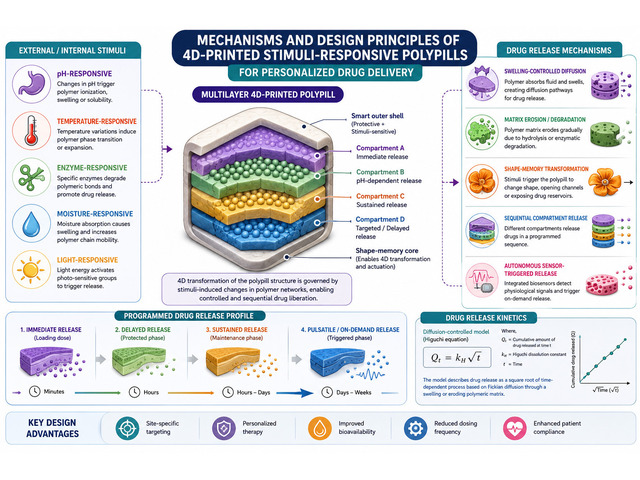
4D Printed Stimuli-Responsive Polypills for Personalized Drug Therapy: Advances, Challenges, and Future Perspectives
Four-Dimensional (4D) printing is transforming pharmaceutical manufacturing by enabling the development of adaptive drug delivery systems capable of responding dynamically to physiological and environmental stimuli. Among the most promising innovations in this field are 4D printed stimuli-responsive polypills, which integrate multiple active pharmaceutical ingredients within a single programmable dosage form capable of controlled and personalized drug release. These systems utilize smart biomaterials including hydrogels, shape-memory polymers, and stimuli-responsive composites that react to triggers such as pH, temperature, enzymes, moisture, magnetic fields, and light. This review explores recent advancements in 4D pharmaceutical printing technologies, adaptive release mechanisms, biomaterials engineering, nanotechnology integration, and artificial intelligence-assisted drug delivery systems. Furthermore, the review discusses the potential applications of adaptive polypills in chronic disease management, including cardiovascular diseases, diabetes, cancer, neurological disorders, and inflammatory diseases. Major challenges involving manufacturing complexity, scalability, regulatory approval, material biocompatibility, long-term safety, and ethical considerations are also critically analyzed. Emerging developments in biosensor integration, wearable health technologies, and AI-driven precision therapeutics indicate that 4D printed polypills may significantly reshape future personalized medicine. Despite current limitations, ongoing interdisciplinary advancements suggest strong future clinical potential for intelligent adaptive pharmaceutical systems.
Disquisition of Drug Dose Determinations to Effectuate Sustained Therapeutic Response in Patients: A Comprehensive Review
According to the World Health Organisation, the Defined Daily Dose is the estimated daily maintenance dosage for a medication used for its primary indication in humans. Drug dose determination is extremely important for any drug. When a newly created, more precise dose plan differs considerably from the authorised label, it is crucial to assess the stage of proof needed to modify the label and clinical practice. Age has a significant influence on dose modification, as the acronym implies, because different age groups have different pharmacokinetic and pharmacodynamic characteristics. Furthermore, the measuring of body surface area is one of the most used methods for determining the dosage of chemotherapy medications. The clinical practice guidelines frequently base their recommended dosages on research that include both acute and severe cases of a particular ailment. For drugs acting on central nervous system, tapering of the dose is necessary. Starting such treatment at a low dose and gradually increasing it may reduce the likelihood of the side effects. This all-encompassing strategy emphasizes the value of customized medicine in contemporary clinical practice while promoting patient-centered care. This review article schemes about the various drug dosing considerations reliant on the demographic data, severity of the disease, as well as the individual patient response considering the resulting pharmacokinetics and pharmacodynamics.
Artificial Intelligence in the Pharmaceutical Industry: A Literature Review
Artificial Intelligence (AI) is rapidly transforming the pharmaceutical industry through its integration into pharmacovigilance, drug discovery, predictive analytics, and healthcare governance systems. Traditional pharmacovigilance frameworks rely heavily on spontaneous reporting systems and manual signal detection processes, resulting in delayed identification of adverse drug reactions, fragmented healthcare datasets, and under-reporting. AI-driven technologies such as Machine Learning (ML), Natural Language Processing (NLP), and predictive analytics provide scalable solutions capable of improving adverse drug reaction detection, automated signal identification, and clinical decision-making efficiency. This review critically evaluates the role of AI in pharmaceutical systems with specific emphasis on pharmacovigilance, drug discovery, sustainability, ESG integration, ethical governance, and regulatory preparedness. The study also analyses challenges associated with AI implementation, including algorithmic bias, lack of transparency, data privacy risks, and uneven applicability in emerging healthcare systems such as India. The findings demonstrate that AI has the potential to shift pharmaceutical systems from reactive compliance-based frameworks toward predictive and data-driven healthcare infrastructures. However, sustainable implementation requires strong governance mechanisms, explainable AI models, ethical accountability, and continuous human oversight.
Appraisal of Factors Associated with Uncontrolled Seizures and Medication Adherence
Aim: The main aim is to assess the factors concerning medication non-adherence and uncontrolled seizures. Materials and Methods: This is a hospital-based prospective observational study conducted in the outpatient department over 6 months, with patients who met the inclusion criteria. Patient’s medication beliefs were assessed using the Beliefs about Medicines Questionnaire [BMQ]. The level of adherence was calculated using Morisky’s Medication Adherence Scale [MMAS-8] to identify factors associated with uncontrolled seizures and non-adherence. Results: Two hundred and ten (210) patients were enrolled. We observed Generalised Tonic-Clonic Seizures (53.3%), Tonic seizures (19.5%), Focal seizures (13.3%), Tonic-clonic seizures (9%, and Absence seizures were also seen in (4.8%) of patients. Only (3.8%) of patients have controlled seizures due to poor medication adherence, compared to (37.6%) of patients who have better medication adherence (OR-9.104, p-0.0001). Patients who had negative beliefs about their treatment were more likely to have uncontrolled seizures (30.9%). (OR- 2.4904, p-0.0019). 49.5% of patients had uncontrolled seizures as a result of anti-epileptic drug’s side effects, as compared to just 9% of patients who had no side effects (OR-2.463, p-0.008). Conclusion: The current study's findings revealed that unemployment, rural location, social habits, co morbidities, poor medication adherence, negative medication beliefs, and the occurrence of adverse drug reactions have a negative impact on epilepsy patients' medication adherence and treatment outcomes. Various studies support that the role of clinical pharmacist activities have a good effect on reducing seizure attacks in epileptic patients. This suggests that the clinical pharmacist’s active participation in epilepsy control, through educating patients about medication adherence, avoiding abrupt antiepileptic medication withdrawal, and reporting adverse drug reactions, is effective and safe when done in collaboration with other healthcare professionals as part of their treatment regimen.
Hypertension Management among Hypertensive Patients in Al-Thawra Hospital, Sana’a City, Yemen: A Cross-Sectional Analysis
Background: Hypertension remains a leading cause of cardiovascular morbidity in low resource settings, yet data on real-world management practices in conflict-affected regions such as Yemen remain scarce. Aim: To evaluate demographic characteristics, adherence to non-pharmacologic therapy, and antihypertensive prescribing patterns among hypertensive patients attending AL-Thawra Hospital, Sana'a City, Yemen. Materials and Methods: A hospital-based, cross-sectional study was conducted among 120 adult patients with confirmed essential hypertension. Data on demographics, comorbidities, lifestyle adherence, and pharmacological regimens were collected via structured interviews and medical record review. Descriptive statistics and Chi-square tests were used for analysis. Results: Participants were predominantly female (58.3%) and aged 41-70 years (82.5%). Overall, 70% reported adherence to non-pharmacologic recommendations, with consistent rates across comorbidity subgroups. Angiotensin-Converting Enzyme inhibitors/ Angiotensin Receptor Blockers (ACE/ARB) were the most prescribed drug class (61.7%), with significantly higher utilization among females (39.2% vs. 22.5%). ACE/ARB monotherapy was the predominant regimen (39.2%); however, combination therapy with ACE/ARB plus β-blocker was frequently prescribed to patients with heart failure/ischemic heart disease (10.0%), reflecting guideline-aligned practice. Conclusion: Hypertension management in this Yemeni tertiary setting demonstrates reasonable alignment with international guidelines regarding lifestyle counselling and renin angiotensin system inhibitor use. However, underutilization of thiazide diuretics and calcium channel blockers highlights opportunities for protocol optimization. Strengthening drug supply chains and prescriber education may enhance therapeutic outcomes in similar resource constrained environments.
Accessibility and Willingness of Patients to Pay for Pharmaceutical Care Services in a Tertiary Health Facility, Benin City, Nigeria
Background: Understanding cost and other barriers to Pharmaceutical Care Services (PCS) delivery in Nigeria is key to improving practice and informed government resource allocation. Objectives: This study identifies barriers, perceived value of, and willingness to pay for PCS at University of Benin Teaching Hospital UBTH, Benin City. Materials and Methods: A cross-sectional study was conducted among 311 patients who visited the General Practice Clinic (GPC) pharmacy unit of UBTH. Data were analyzed using SPSS version 23. Descriptive and inferential statistics were applied, with significance set at p<0.05. Results: Most respondents (63%) considered pharmacist-led medication reviews very important, and 65.9% believed pharmacists could significantly improve their health outcomes. Over half (65.3%) of the respondents were willing to receive PCS virtually. The overall satisfaction score was moderate (mean=3.41±1.07). Financial considerations influenced uptake, with 46.9% willing to pay between ₦500-₦2000 ($0.35 to $1.38) per consultation. Employment status, age, and household income significantly influenced perceived value and willingness to pay (p<0.05). Higher education and income levels were associated with greater willingness to pay for PCS. Conclusion: The study highlights a strong recognition of the value of pharmaceutical care services among patients, but cost and limited pharmacist availability hinder access; telepharmacy and flexible payments may improve uptake.
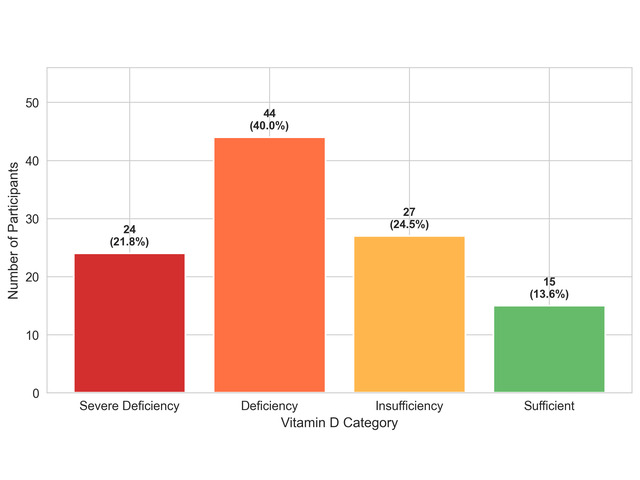
A Cross-Sectional Study Examined the Relationship between Vitamin D Deficiency and Mental Health in Indian Adults
Background: Vitamin D deficiency is a pervasive public health concern in India, with reported prevalence rates of 70-90%. Emerging evidence suggests a relationship between hypovitaminosis D and psychiatric morbidity; however, comprehensive data examining multiple mental health domains simultaneously in the Indian context remain sparse. Objectives: To evaluate the association between serum 25-hydroxyvitamin D [25(OH)D] levels and depression, anxiety, perceived stress, sleep disturbance, fatigue, and health-related quality of life among Indian adults aged 18-40 years. Materials and Methods: This cross-sectional analytical study enrolled 110 participants from urban and semi-urban settings. Serum 25(OH)D was measured using ECLIA. Depression (PHQ-9), anxiety (GAD-7), stress (PSS-10), Insomnia (ISI), Fatigue (FSS), and quality of life (WHOQOL-BREF) were assessed. Data were analysed using ANOVA, correlations, multiple linear regression, and logistic regression. Results: Mean serum 25(OH)D was 19.2 +/- 11.3 ng/mL, with 86.4% classified as deficient or insufficient. Vitamin D was significantly inversely correlated with PHQ-9 (r=-0.462, p<0.001), GAD-7 (r=-0.426, p<0.001), PSS-10 (r=-0.240, p=0.012), ISI (r=- 0.266, p=0.005), FSS (r=-0.472, p<0.001), and positively with WHOQOL-BREF (r=0.300, p=0.001). Vitamin D independently predicted depression (beta=-0.131, p<0.001). Logistic regression: aOR=0.89 (95% CI: 0.82-0.96, p=0.004) for moderate-severe depression. Conclusion: Vitamin D deficiency is significantly associated with worse mental health outcomes among Indian adults. Routine screening and supplementation strategies warrant consideration in mental health practice.
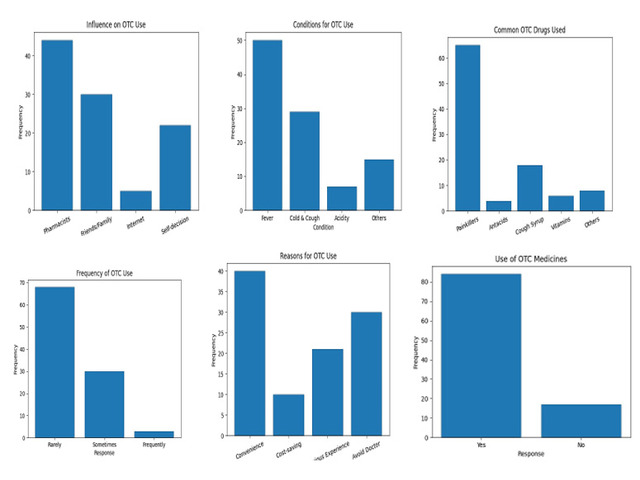
Assessment of Over-the-Counter (OTC) Drug Usage Patterns and Awareness among College Students
Objectives: The present study was conducted to assess the Knowledge, Attitude, and Practice (KAP) regarding the use of Over-the-Counter (OTC) drugs among 101 participants. Materials and Methods: A cross-sectional survey was carried out using a structured questionnaire. Participants. The majority of participants belonged to the 21-23 years age group (38.6%), with a mean age of 21.84 years. Results: The results showed that 83.2% of participants reported using OTC medicines, with most using them rarely (67.3%). - Fever (49.5%) and headache were the most common conditions for OTC drug use, and painkillers (64.4%) were the most frequently used medications. Convenience (39.6%) and avoiding doctor visits (29.7%) were the primary reasons for use. Awareness regarding OTC drugs was high, with 97% of participants demonstrating good knowledge. However, practice was only moderate in 62.4% of participants, and 66.3% exhibited a negative attitude toward OTC drug use. The mean scores were 5.79±0.47 for awareness, 2.18±0.61 for practice, and 1.10±1.03 for attitude. The Chi-square test showed no significant association between awareness and practice (p=0.839). Conclusion: The study concludes that despite high awareness, safe practices are not consistently followed, highlighting the need for educational interventions.
Centralized Clinical Pharmacy-Drug Order Verifications in Super Speciality Hospitals: Impact on Patient Outcomes and Safety
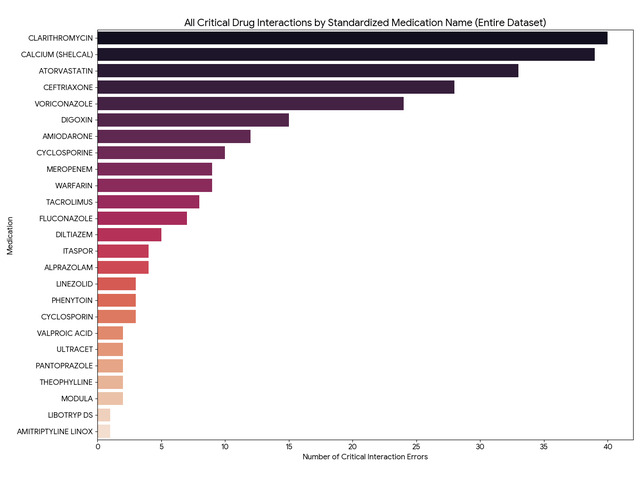
Introduction: The Centralized Clinical Pharmacy model in multi-branch hospitals plays a pivotal role in enhancing patient safety by minimizing medication errors through the standardization of prescription review and documentation. Objectives: To evaluate the effectiveness of the centralized pharmacist oversight in identifying and correcting prescribing issues. Materials and Methods: A review of 17,255 prescription checks was conducted to assess the prevalence of medication errors. Results: The most common issues identified included therapeutic duplication, incorrect dosing, missing diluent documentation, incorrect scheduling, and incomplete administration details. High-alert medicines and antibiotics were found to carry the greatest risk of errors. Discussion: The findings of this review underscore the importance of centralized pharmacist oversight in the early identification and correction of prescribing problems. This oversight supports rational drug use and reinforces medication governance across hospital branches. Conclusion: Implementing a centralized clinical pharmacy model significantly contributes to reducing medication errors and enhancing patient safety in multi-branch hospital settings.
In silico Decoding of the Antidiabetic Potential of Sphaeranthus indicus Linn.: A Network Pharmacology and Molecular Docking Integration
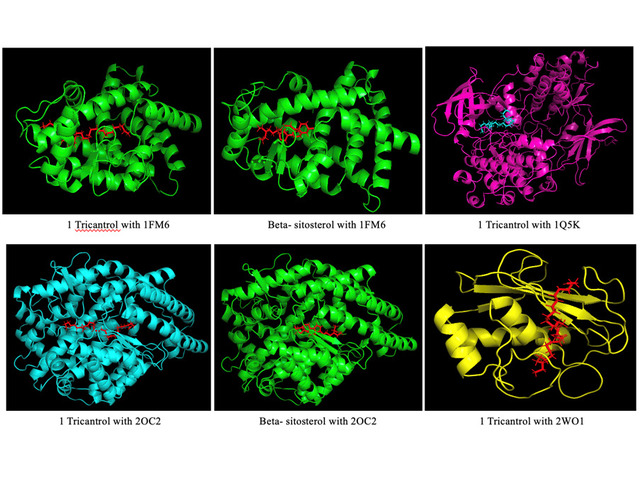
Diabetes mellitus is a chronic disease that leads to persistent high blood sugar along with dysfunction of various metabolic systems. Though effective, the latest drug therapies still have some problems like causing side effects and not being able to stop the progression of the loss of cell mass. To study the anti-diabetic potential of Sphaeranthus indicus Linn., a plant that is highly valued in Ayurvedic medicine, this research employs a computational framework linking network pharmacology, molecular docking, and ADME analysis. Screening showed 57 phytochemicals of which 14 significantly interacted with 123 genes associated with Type 2 Diabetes. Through network analysis, the central hub genes ACE, GSK3B, PTGS2, and PTPN1 were identified. 1-triacontanol and beta-sitosterol, two compounds from molecular docking, were found to have strong binding affinity to the major targets PPARgamma, GSK3beta, and ACE with the former having a comparable or even better affinity than the reference drug rosiglitazone. Besides, they exhibited high binding potential for EphA4, which might unveil a pathway for the control of hyperglucagonemia. ADME analysis showed these lead compounds to be drug-like candidates but with a caveat of somewhat limited solubility. These results justify the use of S. indicus as an effective multi, target medicine for not only diabetes but also its vascular complications at the molecular level.
A Cross-Sectional Study Examined the Relationship between Vitamin D Deficiency and Adult Depression, Anxiety, Stress, Sleep Disturbance, Fatigue, and Quality of Life in India
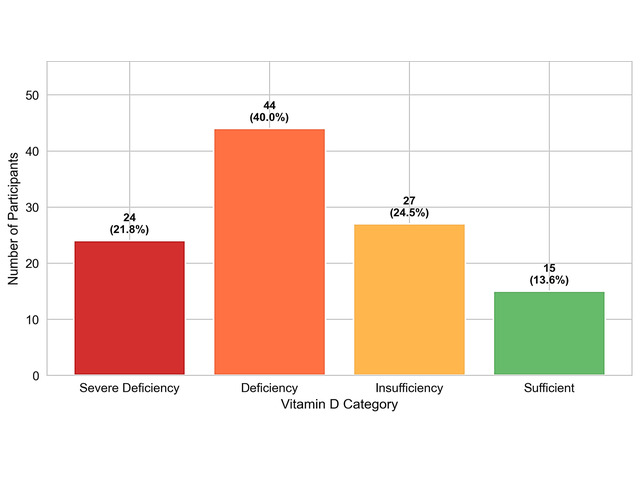
Background: Vitamin D deficiency is a pervasive public health concern in India, with reported prevalence rates of 70-90%. Emerging evidence suggests a relationship between hypovitaminosis D and psychiatric morbidity; however, comprehensive data examining multiple mental health domains simultaneously in the Indian context remain sparse. Objectives: To evaluate the association between serum 25-hydroxyvitamin D [25(OH)D] levels and depression, anxiety, perceived stress, sleep disturbance, fatigue, and health-related quality of life among Indian adults aged 18-40 years. Materials and Methods: This cross-sectional analytical study enrolled 110 participants from urban and semi-urban settings. Serum 25(OH)D was measured using ECLIA. Depression (PHQ-9), anxiety (GAD-7), stress (PSS-10), Insomnia (ISI), Fatigue (FSS), and Quality of Life (WHOQOL-BREF) were assessed. Data were analysed using ANOVA, correlations, multiple linear regression, and logistic regression. Results: Mean serum 25(OH)D was 19.2 +/-11.3 ng/mL, with 86.4% classified as deficient or insufficient. Vitamin D was significantly inversely correlated with PHQ-9 (r=-0.462, p<0.001), GAD-7 (r=-0.426, p<0.001), PSS-10 (r=-0.240, p=0.012), ISI (r=- 0.266, p=0.005), FSS (r=-0.472, p<0.001), and positively with WHOQOL-BREF (r=0.300, p=0.001). Vitamin D independently predicted depression (beta=-0.131, p<0.001). Logistic regression: aOR=0.89 (95% CI: 0.82-0.96, p=0.004) for moderate-severe depression. Conclusion: Vitamin D deficiency is significantly associated with worse mental health outcomes among Indian adults. Routine screening and supplementation strategies warrant consideration in mental health practice.
Current Issue
Browse the latest published articles in the current issue
Archives
Access our complete collection of past issues and articles
Submit Article
Share your research with the global scientific community
About Journal of Pharmacy Practice and Community Medicine
Journal of Pharmacy Practice and Community Medicine is a peer-reviewed, open-access publication dedicated to advancing knowledge in pharmacy practice, clinical pharmacology, and patient-centered care. We publish original research, systematic reviews, case reports, and editorials authored by clinicians, academics, and researchers from across the globe. Our editorial mission is to bridge the gap between laboratory science and bedside practice, ensuring that emerging evidence translates into measurable improvements in therapeutic outcomes, medication safety, and public health.
Every manuscript submitted to Journal of Pharmacy Practice and Community Medicine undergoes a rigorous double-blind peer-review process conducted by an international panel of subject matter experts. We are committed to upholding the highest standards of scientific integrity, transparency, and reproducibility, and we adhere to the recommendations of the International Committee of Medical Journal Editors (ICMJE) and the Committee on Publication Ethics (COPE). Authors retain copyright of their work under a Creative Commons license, which allows broad dissemination, reuse, and citation while preserving attribution.
Our scope spans clinical pharmacy, pharmacotherapy, pharmacoeconomics, pharmacoepidemiology, hospital and community pharmacy practice, drug regulatory affairs, pharmaceutical care models, and digital health innovations in medication management. Readers, including pharmacists, physicians, nurses, policy makers, students, and educators, will find timely articles that inform daily clinical decisions, guide formulary management, and shape pharmacy education curricula. We particularly encourage submissions that address health disparities, low- and middle-income country contexts, antimicrobial stewardship, chronic disease management, and the integration of artificial intelligence into clinical workflows.
We invite you to explore our archives, subscribe to our newsletter for issue alerts, and consider submitting your own research. Together, we can build a more evidence-informed, equitable, and patient-focused future for pharmacy practice worldwide.